Describing the technological transition from horse-drawn carriages to steam-powered travel in The Railway Journey: The Industrialization of Time and Space in the Nineteenth Century, historian Wolfgang Schivelbusch writes:
As the new technology terminated the original relationship between the pre-industrial traveler and his vehicle and its journey, the old technology was seen, nostalgically, as having more “soul”.1
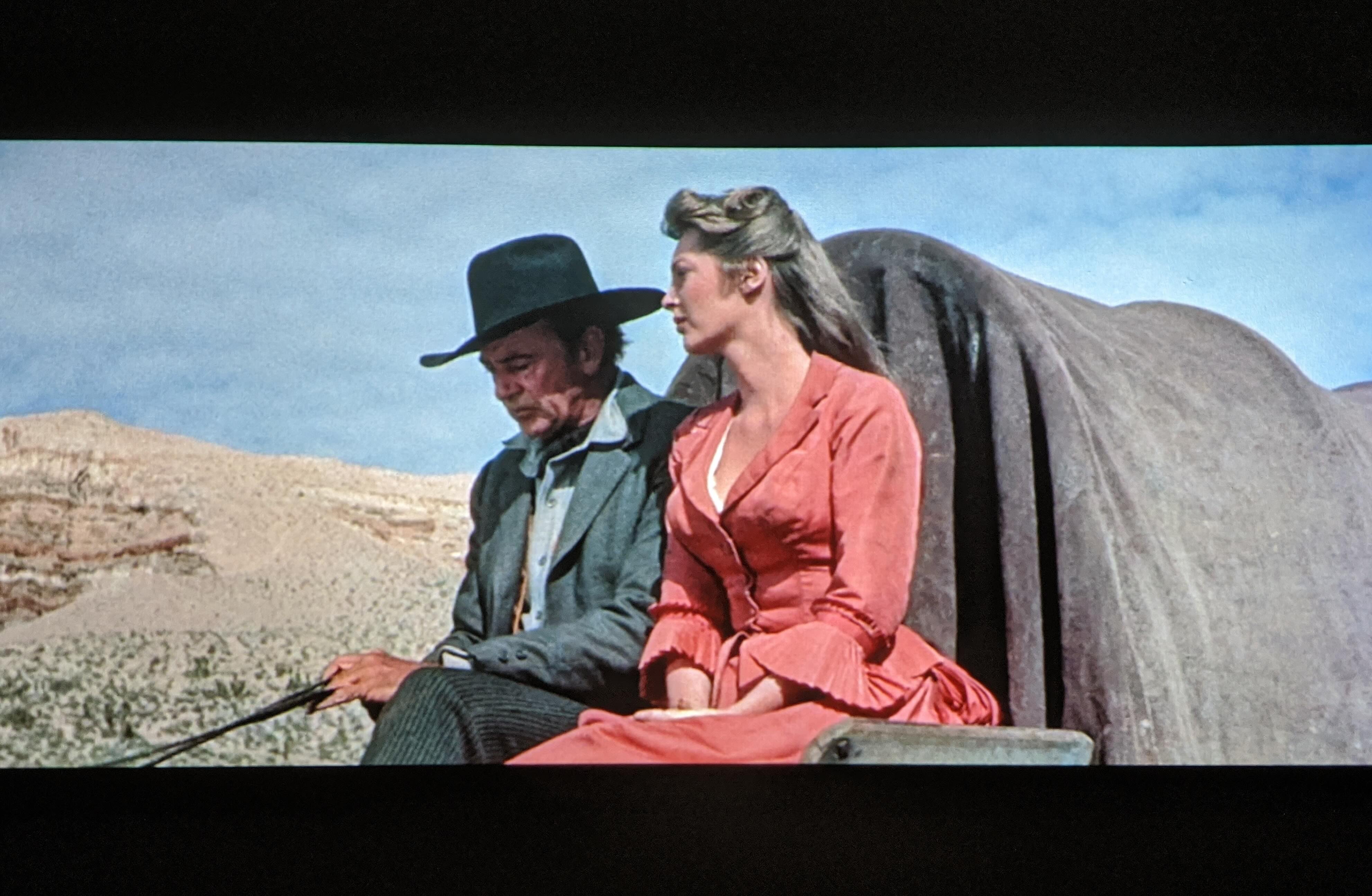
Among many other voices from the time, he quotes Thomas De Quincey (from 1849):
Seated in the old mail-coach, we needed no evidence out of ourselves to indicate the velocity. … The vital experience of the glad animal sensibilities made doubts impossible on the question of our speed; we heard our speed, we saw it, we felt it as a thrilling; and this speed was not the product of blind insensate agencies, that had no sympathy to give, but was incarnated in the fiery eyeballs of the noblest among brutes, in his dilated nostril, spasmodic muscles, and thunder-beating hoofs.
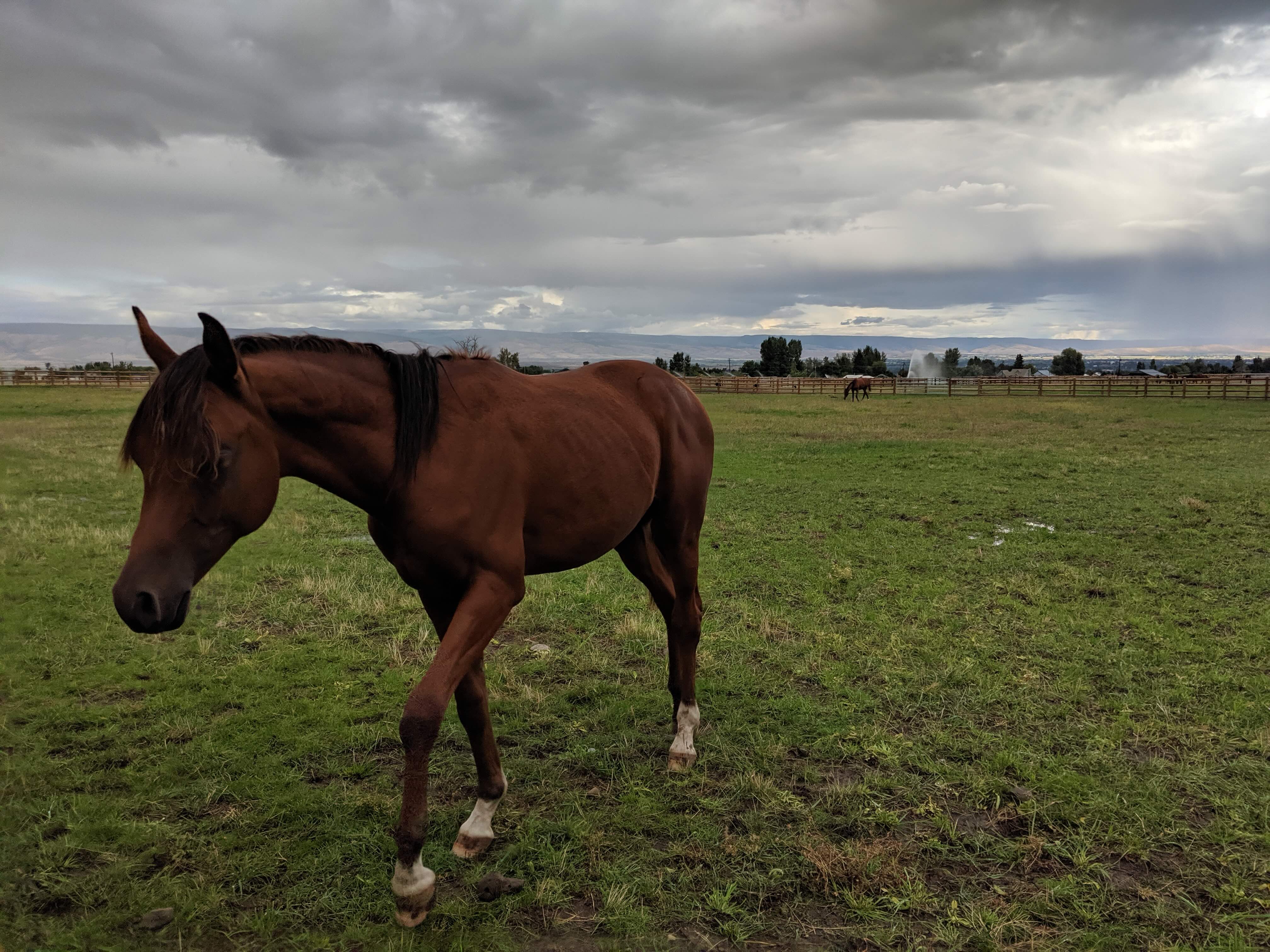
One might expect the coming of railways to provide a novel thrill, some sense of excitement about moving quickly throuhg space. But later in the book, Schivelbusch describes how travelers experienced the railway journey, by contrast, as one of profound boredom. Accustomed to looking out the window at nearby details passing by the carriage, the faster speed of the train (nearly three times faster!) meant that these details became simply a blur. Somehow unable (or unwilling) to adapt by looking at the farther away features of the landscape (themselves now moving by faster), passengers felt only impatience to get to the destination. Schivelbusch quotes Francis J. Lieber from 1834:
Pent up in a narrow space, rolling along on an even plain which seldom offers any objects of curiosity, and which, when it does, you pass by with such rapidity, that your attention is never fixed; together with a number of people who have all the same object in view, and think like you of nothing else, but when they shall arrive at the journey’s end — thus situated, you find nothing to entertain or divert you, except now and then a spark flying into the window of the car.
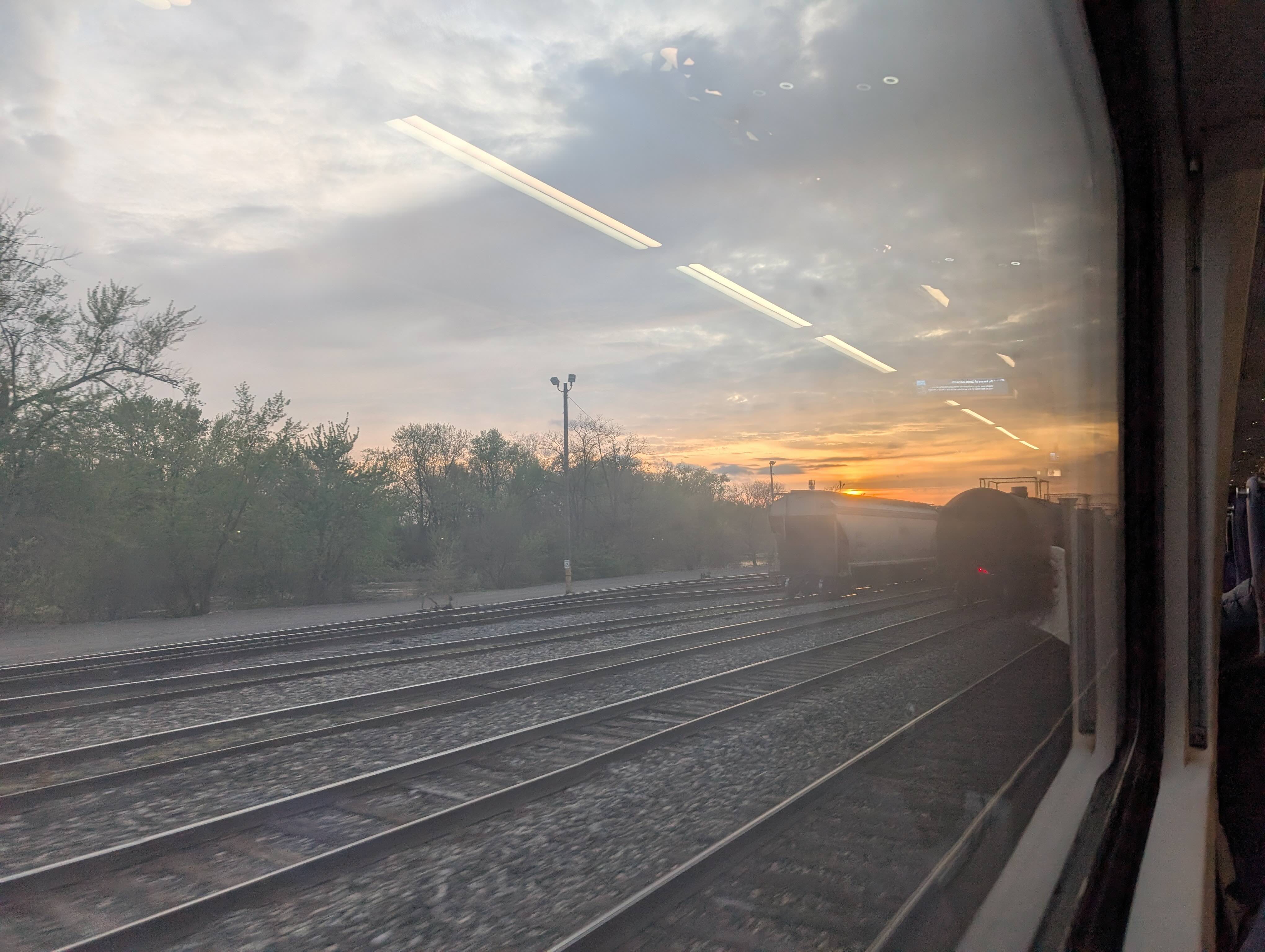
I think it’s generally hard to put oneself in the position of someone going through that kind technological transition, and feel what they might have felt. It seems paradoxical that moving faster through space would create a greater sense of boredom, but then we probably don’t have a good sense of what the experience of taking the slower mode would have been like.2 Transportation is not simply a matter of getting from point A to point B, but rather the experience of a journey, played out in time, one which has its own distinctive character and texture.
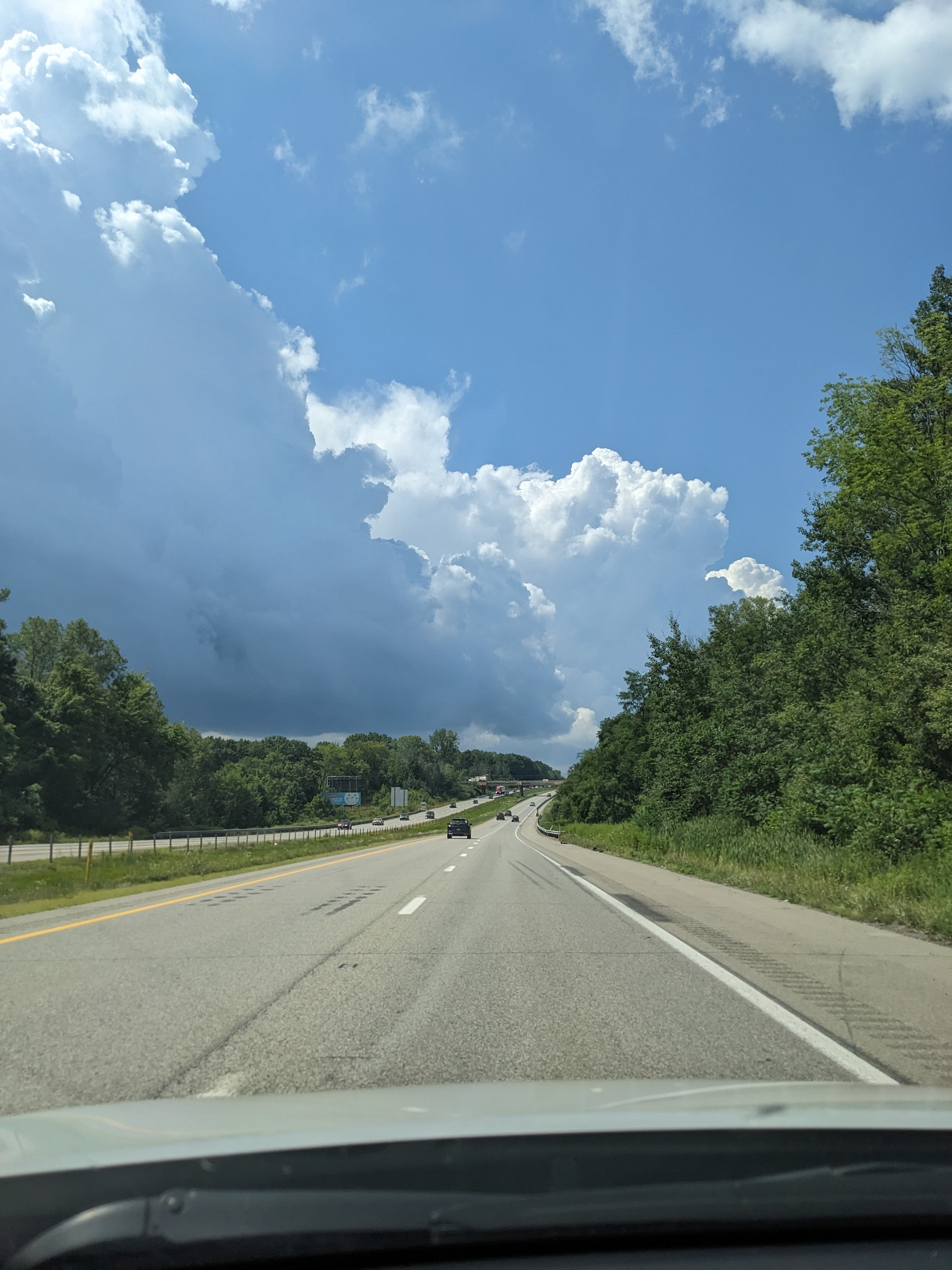
That being said, we can certainly find parallels to the early railway journey in our own experience. Traveling in a car on the highway, it can be fun to look across different distances, from the slowly moving far horizon, to the dramatic blur of posts or other infrastructure right next to one’s car. Famously, modern cars are smooth enough that we can’t truly feel how fast we are going. The fact that other cars are going roughly the same speed fools us into thinking it’s all happening much slower than it is. Focusing on the near distance can help to remind us of our actual speed relative to the earth. Whipping our eyes from front to back can allow us to momentarily focus on an object in motion as if we were nearly still, and yet that can only last for a moment before it is gone and the landscape moves on.
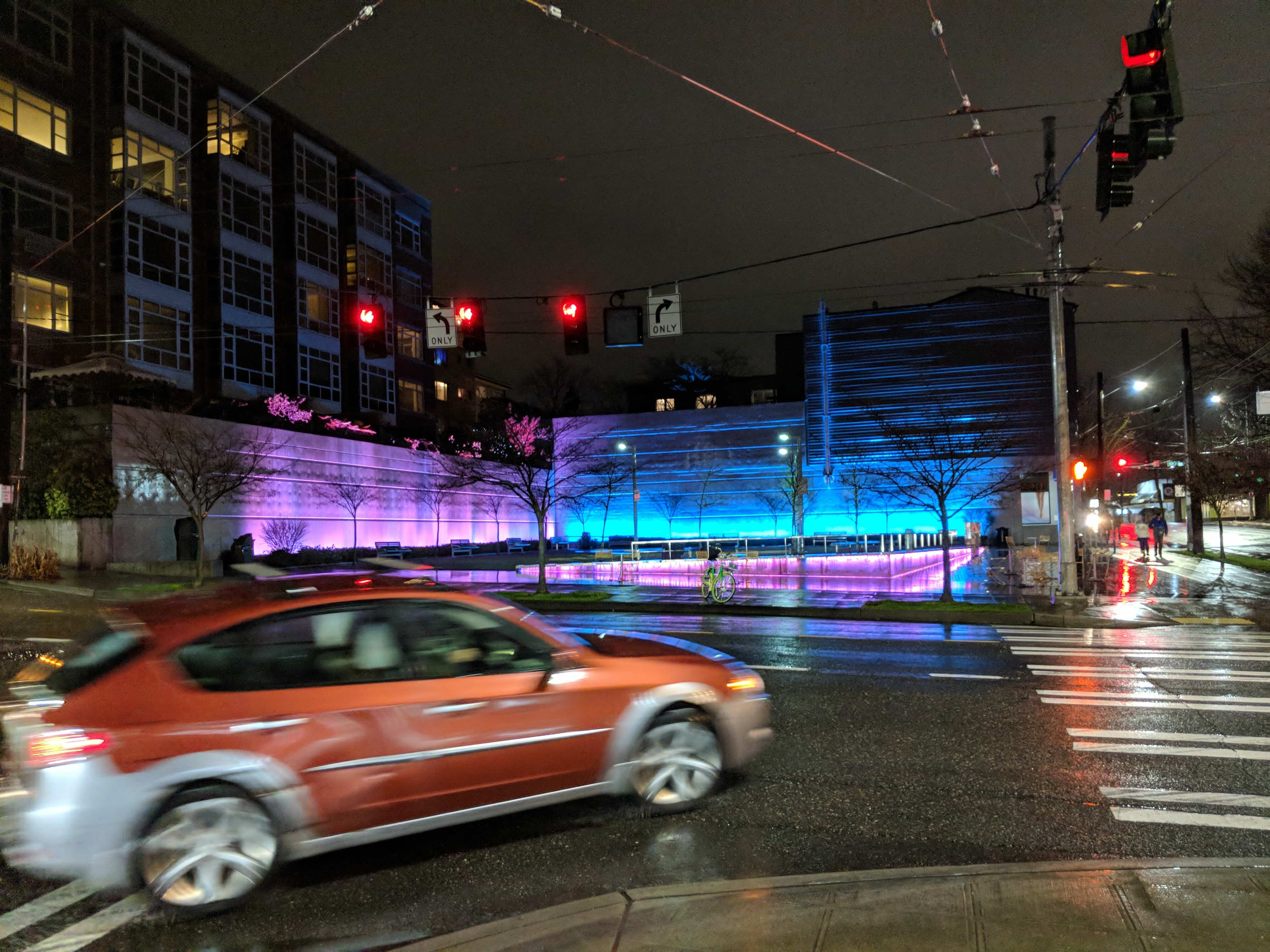
Different modes of transport provide different speeds and different experiences. Riding a bicycle is one of the most freeing modes, with nothing separating us from the environment, and few limitations on where we can go. Playing with the distance of one’s gaze is again rewarding; when looking forward, there seems to be a moment of transition, where our experience of vision goes from stable to blurred. Look far enough forward and we can track everything moving before us. Look directly ahead of the front wheel and you will just see an indistinguishable blur of the road surface. Adjusting one’s gaze to try to find the moment of transition between these can create a kind of vertigo, a singularity where the incoming road disappears into the blur passing below you. I find it’s not quite possible to hold one’s gaze exactly at that point, although it is interesting to try.
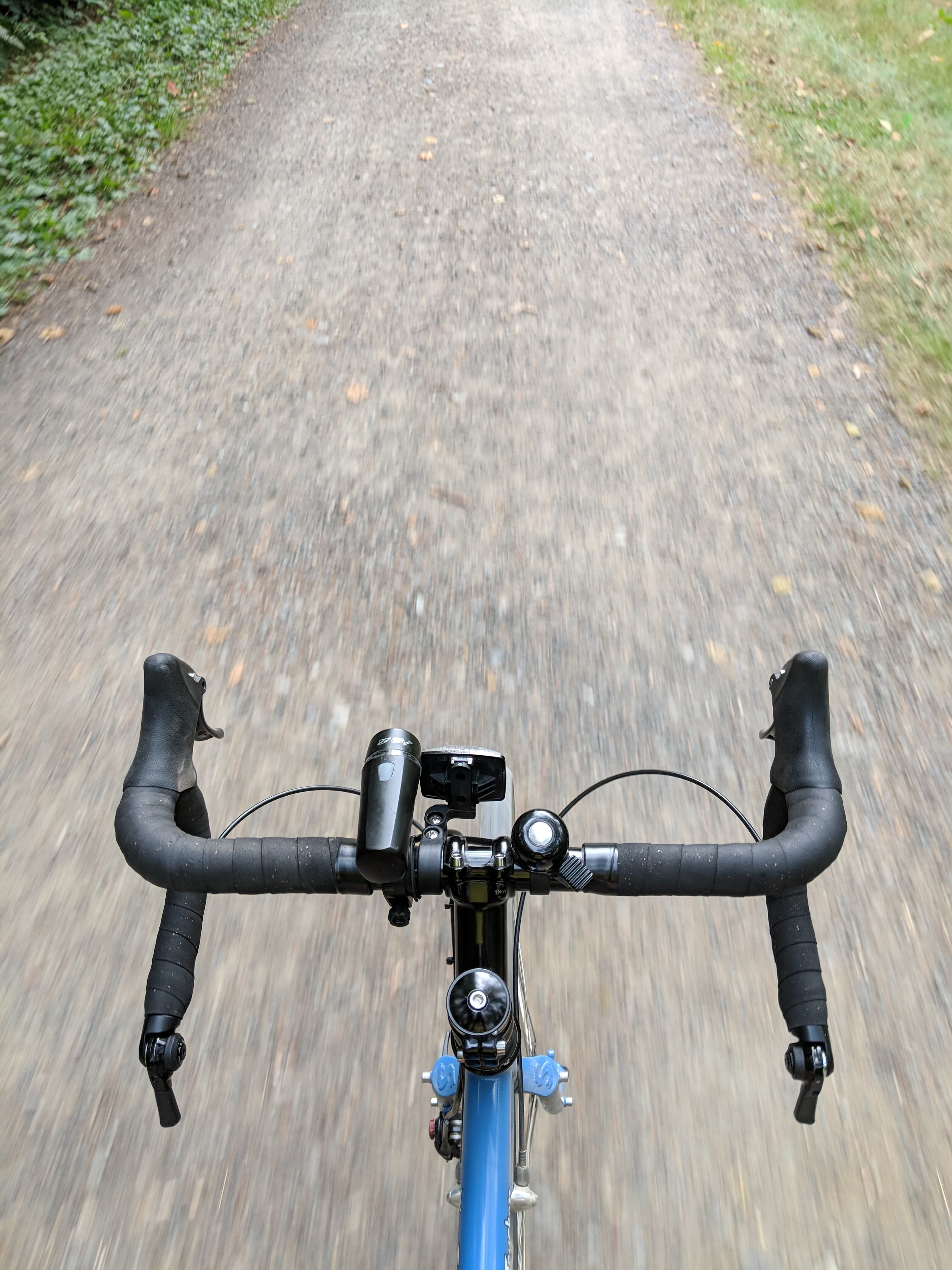
Flying is of course the most compelling example of this. There is nothing else in our daily lived experience that quite compares to the perspective we can get from being so far above the earth. And yet, because we are so far above it, the fact that we are moving so fast basically does not register at all. The only time we might get a brief sense of this is if we happen to pass another plane flying in the opposite direction. But again, this will only last for an instant, and even then the other plane is likely too far to give an accurate impression of speed. When taking off or landing, we can again relate our movement more closely to objects on the ground, but at perhaps only a third of the speed compared to cruising altitude.
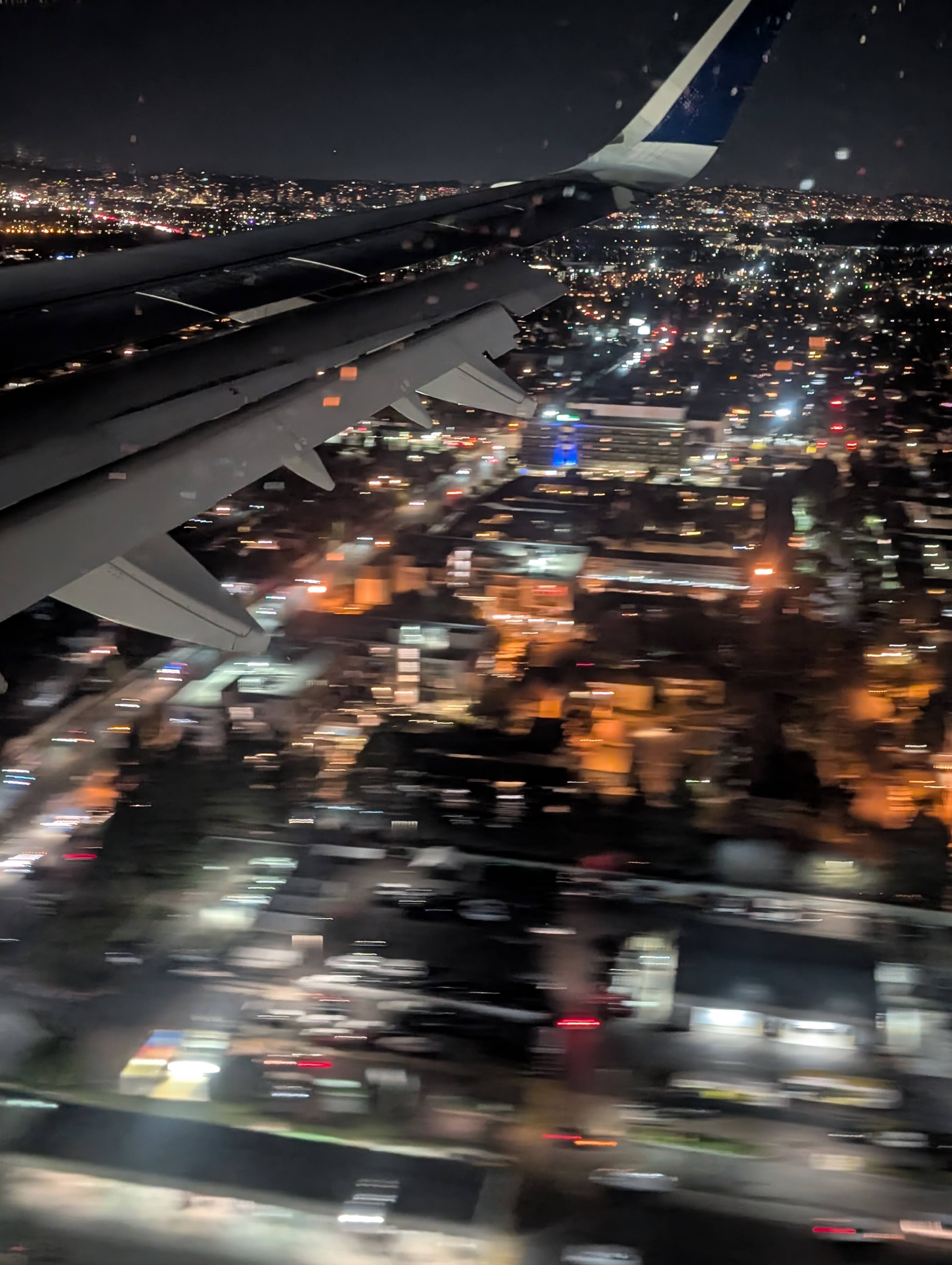
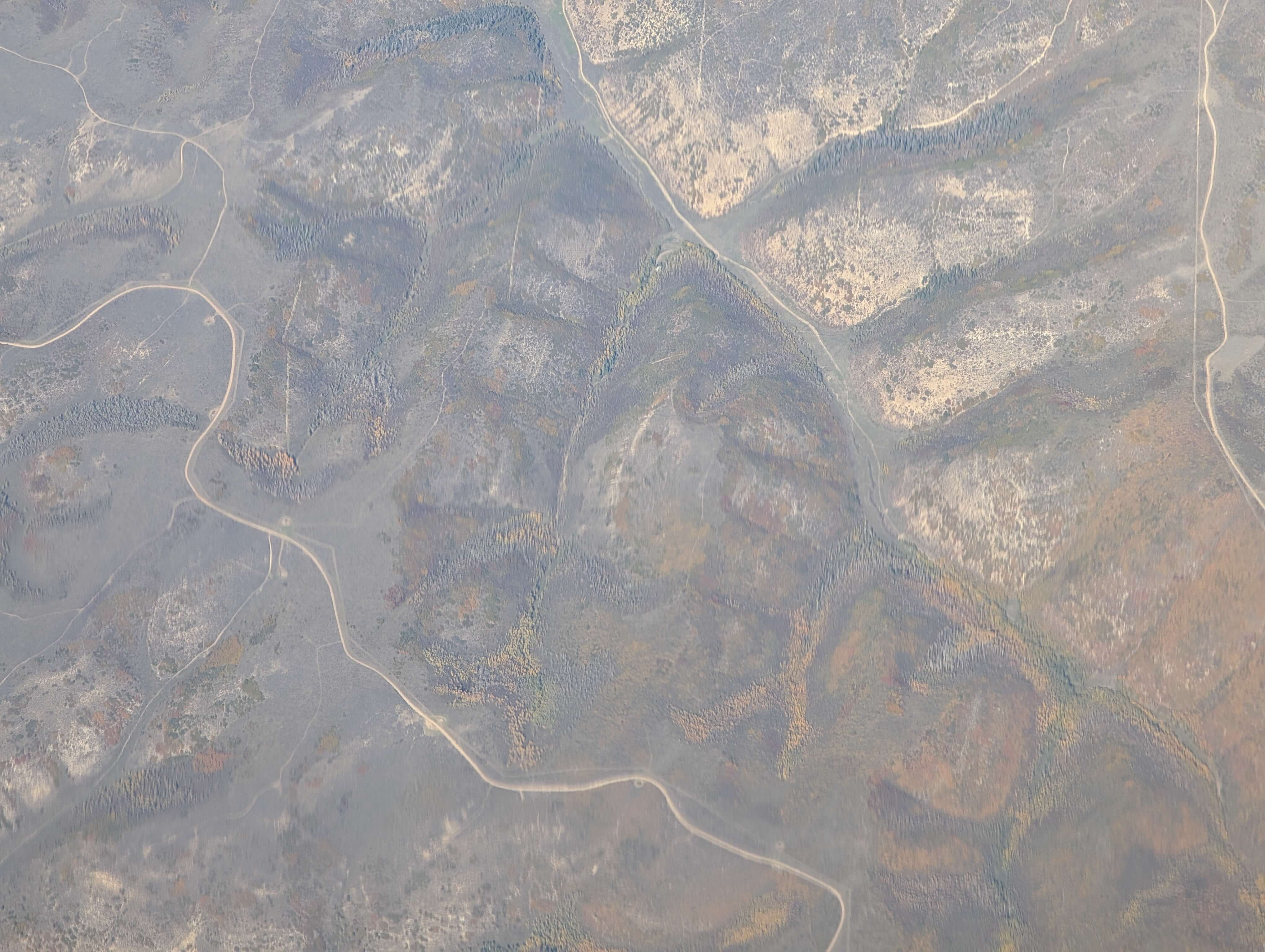
In terms of the visual experience, almost any flight provides some rewards. But flying across North America provides an especially rich set of ever evolving landscapes, from flatlands, to prairie, to mountains, to desert. Both the urban and the natural environment provide fascinating glimpses into both sociotechnical patterns of human behavior, and the effect of gradual forces like erosion and fire. Compared to a railway journey, there is little or nothing to obstruct our view, except perhaps for clouds.
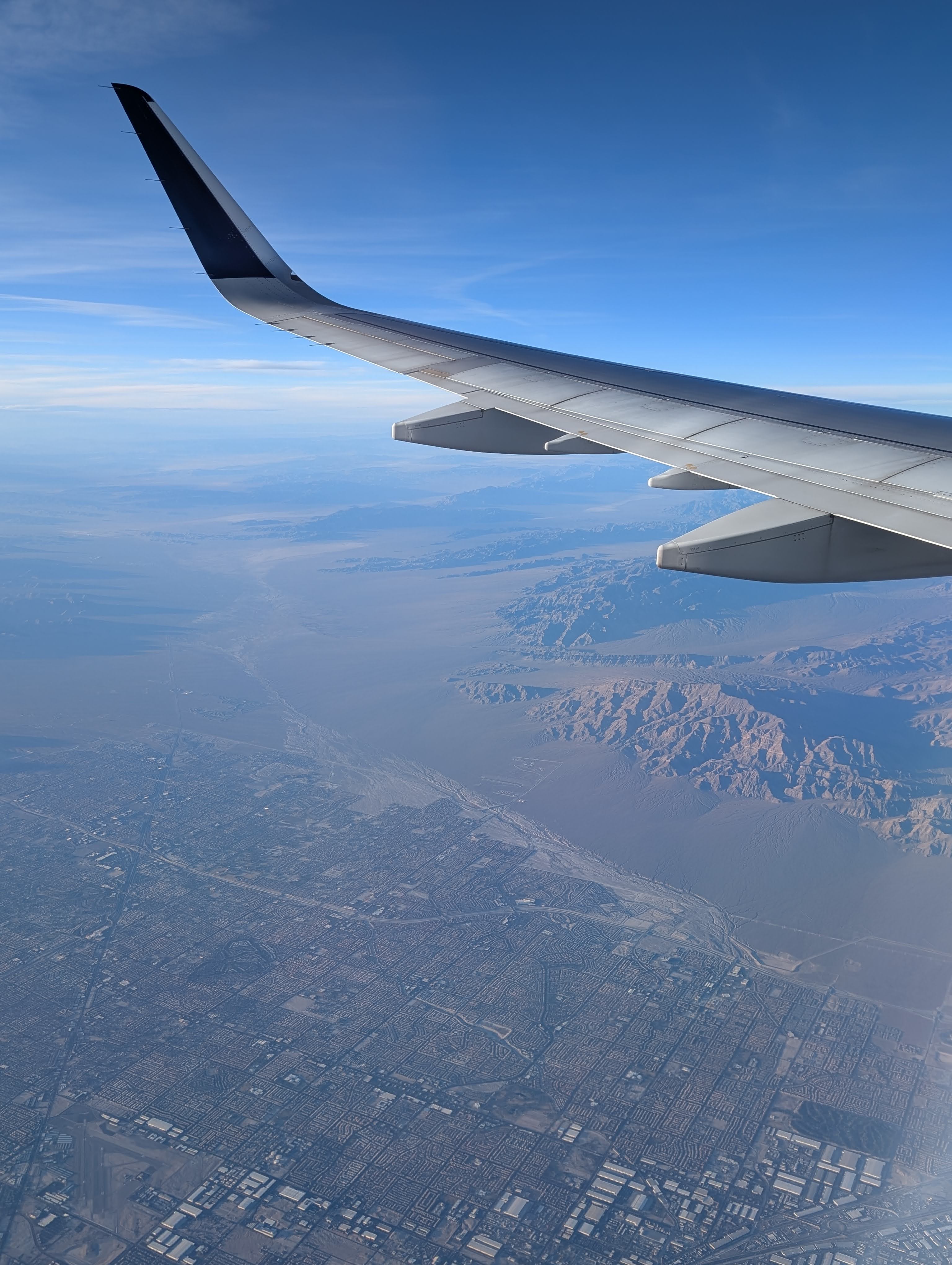
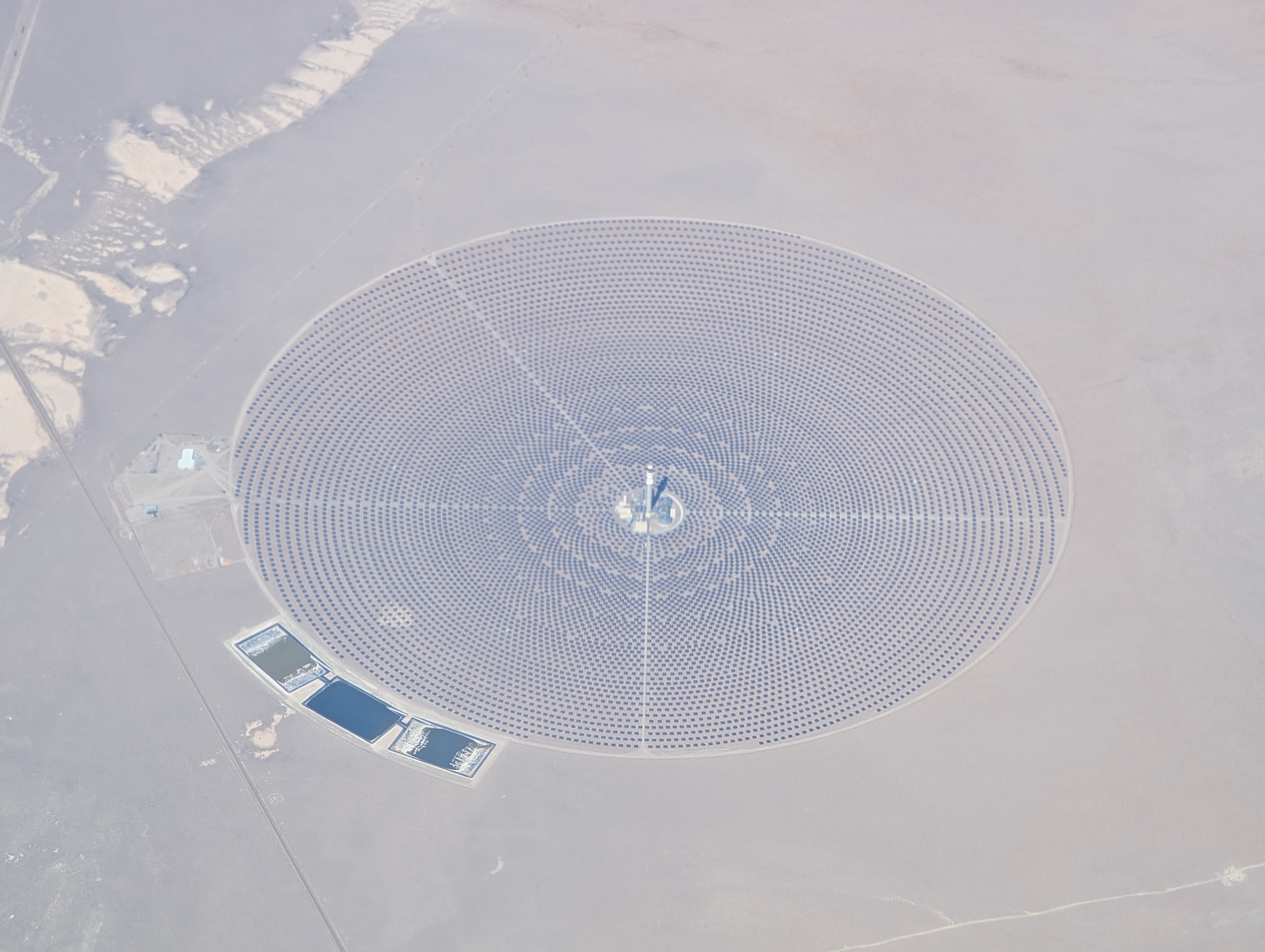
Given the vastness of the landscape, one might expect to see something slightly different on every such trip. But of course planes also follow regular routes most of the time, not so different from the way in which trains simply follow their tracks. Repeated flights between two destinations might actually provide quite a similar experience. From time to time, something singular and memorable might even appear, such as this concentrated solar power in Nevada, which I have now seen multiple times from the air.3
It will never cease to amaze and sadden me how many people sitting in window seats will close their window shades while on an airplane. I can hardly believe that they would willingly miss out on such a miraculous experience, and can’t help but wonder if they somehow don’t know what they are missing. On the other hand, one could argue that it is actually nothing so special. It is indeed a sign of how strange our times are, that one can retrieve detailed high resolution satellite imagery of almost anywhere on earth.4 One can even simulate the experience of taking any flight one wishes, via flight simulators and the like. And yet, it’s hard for me not to feel like there is something different about the experience of seeing it “live”, in real time.
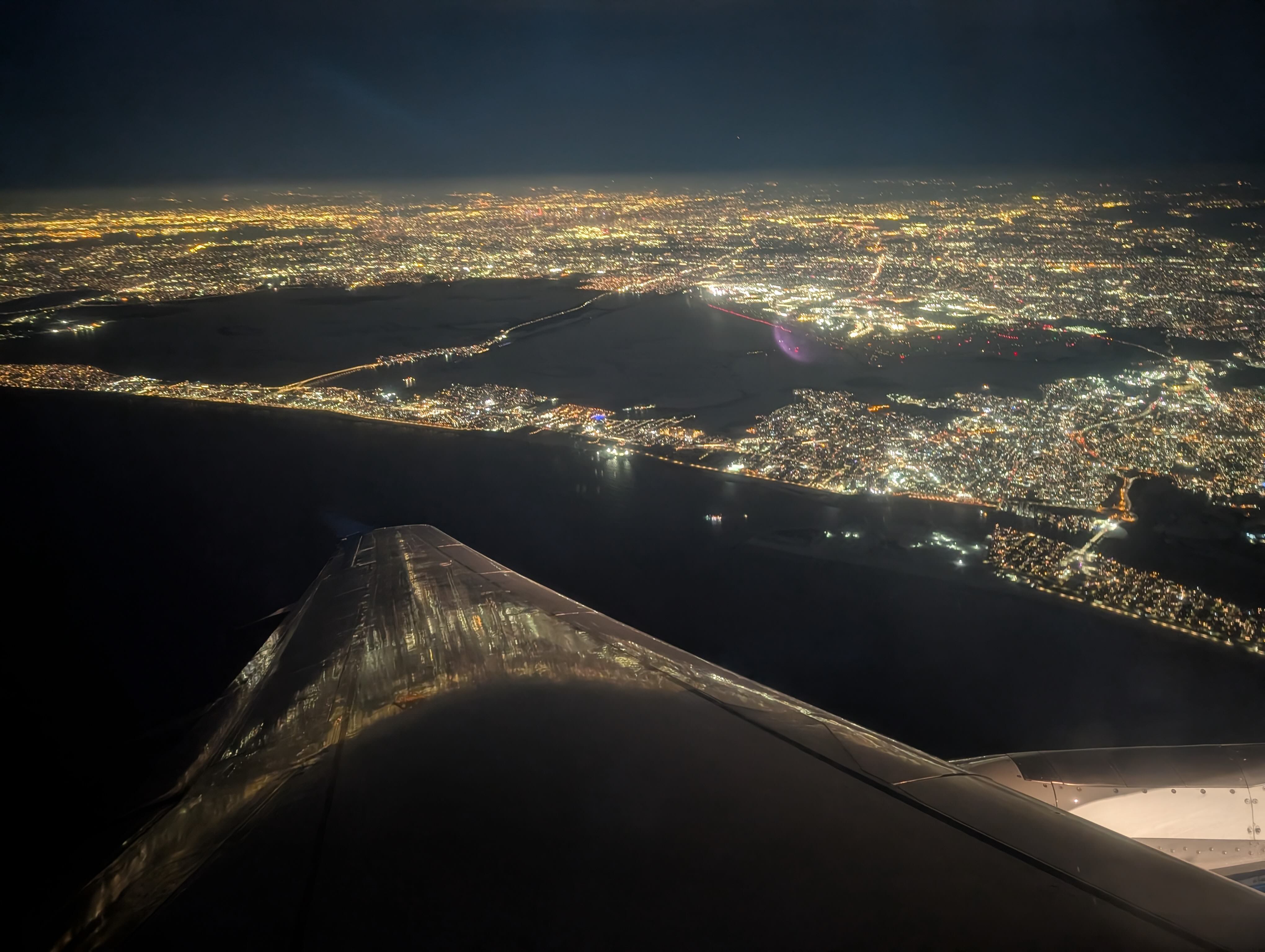
But then, I am surely now being parochial in my own way. There would seem to be relatively little to distinguish the visual experience of a “real” flight from a virtual one, other than being forced to experience the gradual transition over the landscape at the speed of commercial aircraft, limited by whatever weather one might encounter. Given that we speed up the audio we listen to, and indeed use podcasts and audiobooks to block out the sounds of the world as we are traveling through it, how is it any different to eschew the visual experience of a plane, and experience a different reality on one’s own terms? If we chose to return to faster air travel once again, would I feel like that had marred the experience somehow? Regardless, I personally find the view extremely compelling while flying, but doubt that I would ever choose to simply watch a comparable recording just for fun.
It is in the nature of technology that it disrupts normal ways of living, creating new possibilities, but also eliminating (or making more difficult) the option of maintaining our old ways of being. At the time of the transition from carriages to railways there were no doubt innumerable objections people might have had, from safety, to labor conditions, to concentrated ownership, to power dynamics over who had the right to build what where. Indeed, the railways itself was just one part of a much larger industrial transition, one which had massively disruptive effects, making things worse for many individuals. Nevertheless, I find it interesting that amid all of these struggles, at least some people still chose to frame their objection in aesthetic terms, expressing nostalgia for a time when you could sit in a carriage and look at the flowers and other sights moving by at an appropriate, leisurely, pace.
Schivelbusch, Wolfgang. The Railway Journey: The Industrialization of Time and Space in the Nineteenth Century. University of California Press, 1977. ↩︎
In our own time, I am also reminded of Arcade Fire’s lyrics for We Used to Wait (we used to waste hours just walkin’ around). ↩︎
This is the Crescent Dunes Solar Energy Project. Sadly it has gone through multiple failures and bankruptcies, although it seems like it is once again producing power. ↩︎
Even more remarkably, one can even browse through an archive of such images, taken at different points in time, although ordinary people don’t yet have anything close to a real time perspective, to the best of my knowledge. ↩︎